Walking a Dog in Hot Weather

The safest walk is not set by the clock or air temperature alone. Check heat, humidity, sun, pavement, route shade, and your individual dog—then choose a cooler window, shorten the outing, or replace it with indoor enrichment when conditions are not comfortable.

Quick answer: Walk during the coolest practical part of the day, usually early morning or later evening, and check the ground before committing to the route. Keep hot-weather walks shorter and easier, carry water, favor grass and shade, and turn back at the first sign your dog is struggling.

The practical version.

A practical hot-weather walk check

There is no universal safe temperature. Use the whole day, the walking surface, and your individual dog to choose the least risky option.

QuestionPractical answer
What time should we walk?Choose the coolest practical part of the day, usually early morning or later evening. Confirm the pavement has cooled before committing to the route.
What if it is humid or sunny?Shorten the route, slow the pace, add shade and breaks, and stay close to home. Humidity and direct sun can make a moderate temperature harder to tolerate.
How do I check pavement?Place the back of your hand on the surface for several seconds. If it is uncomfortable, choose grass, change routes, or wait for the ground to cool.
Which dogs need extra caution?Flat-faced, senior, very young, overweight, thick-coated, unfit, or medically vulnerable dogs may need much shorter walks or indoor activity instead.
When should I stop?Stop for unusual panting, excessive drooling, weakness, vomiting, unsteadiness, confusion, abnormal gum color, difficulty breathing, or collapse. Severe signs need urgent veterinary care.

Air temperature is only one input.

What makes a hot-weather walk risky

Heat risk builds from weather, surface, route, exertion, and the dog's ability to cool down. A fixed clock time or temperature cannot capture all five.

Heat, humidity, and direct sun

Dogs rely mainly on panting to release heat. Humidity can make that process less effective, while direct sun and strenuous activity add more heat. Cornell recommends cooler times of day, frequent water opportunities, shade, and avoiding strenuous exercise during hot or humid conditions.

Read Cornell's summer heat guidance →

Pavement and route surfaces

Asphalt, concrete, and artificial surfaces can become much hotter than the surrounding air. Hot ground can burn paw pads and add to the dog's total heat load. Test exposed pavement with your hand, favor grass and shade, and keep an easy route home.

Read the AVMA dog-walking guidance →

The individual dog

Flat-faced dogs may not pant as efficiently. Senior, very young, overweight, unfit, thick-coated, dark-coated, or medically vulnerable dogs can also have less margin for error. Ask your veterinarian for individual limits when health or previous heat stress is a concern.

Read the RSPCA hot-walk guidance →

Timing and stored heat

Early morning often offers cooler air and pavement because surfaces have released heat overnight. Evening may still work, but roads and buildings can hold heat after sunset. Compare the actual hourly conditions instead of assuming one time always wins.

Read the veterinarian-reviewed summer walking tips →

Build the easiest safe version.

How to plan a hot-weather dog walk

The goal is not to preserve the usual walk at any cost. It is to reduce heat load before the leash goes on.

1.

Find the coolest useful window

Compare air temperature, humidity, sun, and recent heat across the whole day. Early morning often beats evening when pavement has stored afternoon heat.

2.

Choose the route first

Favor grass, shade, water access, and a short path home. Avoid exposed asphalt, steep hills, and routes where turning back would take too long.

3.

Reduce pace and duration

Let the outing be a sniff walk rather than a workout. On difficult days, a brief bathroom break may be more appropriate than a recreational walk.

4.

Carry water and pause early

Bring water and a portable bowl. Offer rest and drinking opportunities before the dog looks exhausted, especially on humid routes.

5.

Keep an indoor alternative

Skipping one hot walk is safer than forcing a routine. Use scent games, training, food puzzles, or gentle indoor play until conditions improve.

Lower-risk signals vs. reasons to change the plan

No column guarantees safety. Use these signals together, and let the most concerning condition override the rest.

What mattersUsually easier to manageShorten, delay, or replace the walk
Time of dayCooler early morning or a genuinely cooled later evening.Late afternoon heat or an evening when pavement still feels hot.
SurfaceComfortable grass, shade, or pavement that passes a hand check.Pavement that is uncomfortable to touch, exposed asphalt, or artificial turf in direct sun.
WeatherLower humidity, useful shade, light effort, and no heat alert.High humidity, strong sun, little shade, stagnant air, or an abrupt temperature jump.
DogComfortable breathing, normal pace, responsive behavior, and easy recovery.Heavy panting, drooling, lagging, seeking shade, weakness, confusion, or abnormal gums.
RouteShort loop near home with shade, water, and an easy turnaround.Long exposed route, hills, no water, or no quick way to cool down.

Heat-stress signs need a fast response

Do not push through a warning sign to finish the route. Heat stress can progress quickly and heatstroke is a medical emergency.

  • Stop activity for heavy or unusual panting, excessive drooling, weakness, reluctance to continue, or reduced response to familiar commands.
  • Move the dog into shade or air conditioning and use cool—not ice-cold—water and moving air to begin cooling.
  • Vomiting, diarrhea, unsteadiness, confusion, difficulty breathing, abnormal gum or tongue color, seizures, or collapse require immediate veterinary care.
  • Watch paws for limping, licking, redness, blisters, darker pads, or missing skin after contact with hot surfaces.
  • Ask your veterinarian how breed, age, weight, medications, heart or breathing disease, and previous heat illness should change the walking plan.

Common questions.

Hot-weather dog walking, answered

What time is best to walk a dog in hot weather?

Usually the coolest practical part of the day—often early morning or later evening. Confirm that the pavement has cooled and that humidity, direct sun, route shade, and your dog's individual risk still support the walk.

How hot is too hot to walk a dog?

There is no universal cutoff that fits every dog. Risk changes with humidity, sun, surface temperature, breed, age, health, weight, coat, fitness, and acclimation. When in doubt, shorten the outing, choose grass and shade, or replace the walk.

Is evening always safer than morning?

No. Pavement and buildings can retain heat after sunset, so evening surfaces may remain hot. Early morning often offers cooler ground, but the safer choice is whichever window has genuinely cooler air and surfaces.

How do I check whether pavement is too hot?

Place the back of your hand on the surface for several seconds. If it is uncomfortable, do not ask your dog to walk on it. Use grass, change routes, or wait for the ground to cool.

Can I skip my dog's walk because of heat?

Yes. A brief bathroom break plus indoor enrichment can be safer than a long hot-weather walk. Resume normal outdoor exercise when conditions improve.

What should I do if my dog shows heatstroke signs?

Stop activity, move to a cooler place, begin cooling with cool—not ice-cold—water and airflow, and contact an emergency veterinarian immediately. Severe panting, vomiting, unsteadiness, confusion, abnormal gum color, seizures, or collapse require urgent care.

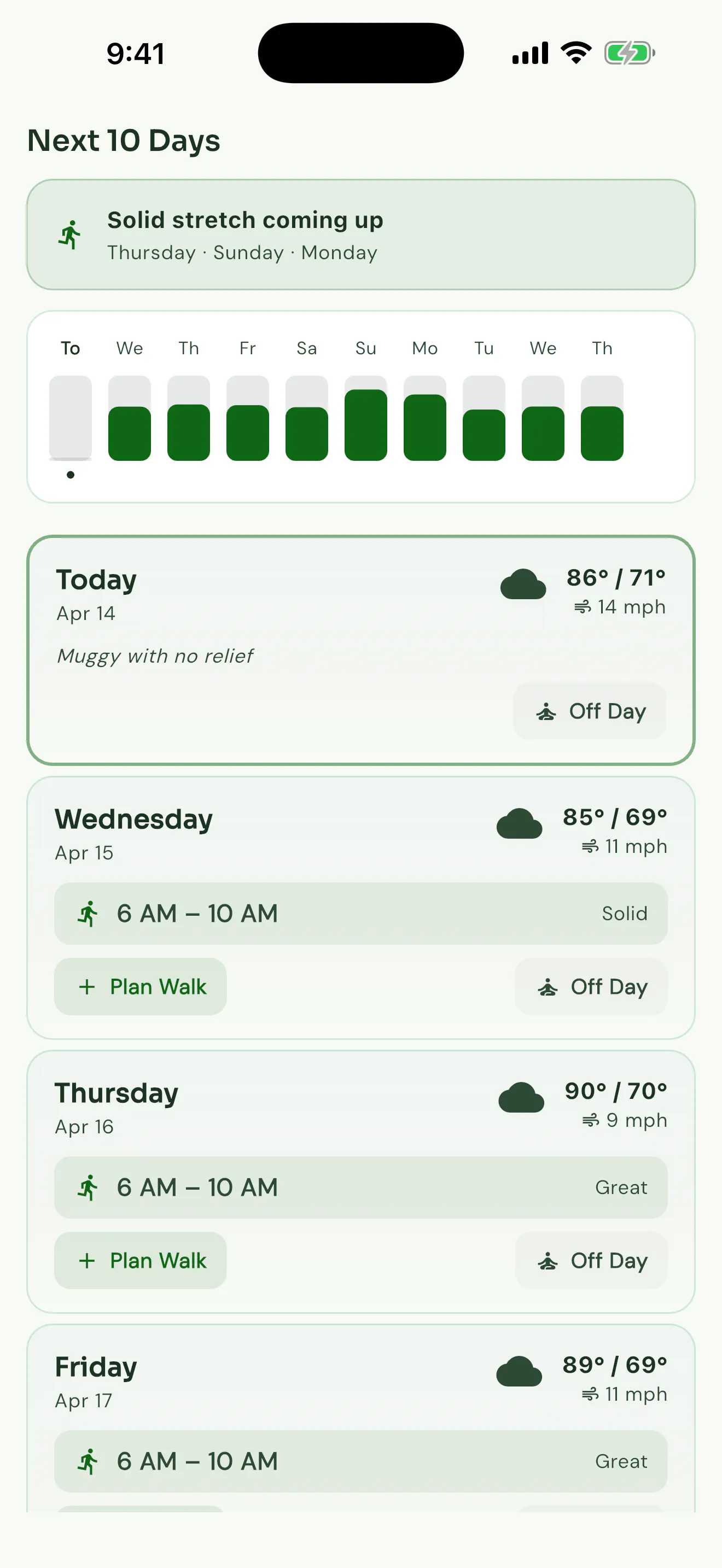
Walk Window 10-day walking forecast with the best hour shown for each day

One last thing.

Get today’s walking window.

Walk Window does the forecast-checking. You just step outside.

Two walks a day, rain or shine? We’ll find the driest windows.