Walking in Cold Weather: Benefits, Risks & Safety

Walking in cold weather can be comfortable and worthwhile when you dress for the conditions, choose a safe route, and shorten the walk when needed. There is no universal cutoff: wind chill, wetness, ice, daylight, health, and time outside matter as much as the thermometer.

Quick answer: Check the feels-like temperature, wind, precipitation, and footing—not only the air temperature. Wear moisture-wicking layers, cover exposed skin, choose shoes with traction, and turn back if you or your dog cannot stay warm, steady, and comfortable.

The practical version.

Is it safe to walk outside in cold weather?

Use the temperature as a starting point, then let wind, wetness, footing, daylight, and individual tolerance make the final decision.

QuestionPractical answer
Is cold-weather walking good for you?It can help you stay active through winter, and cooler air may feel more comfortable than heat and humidity. The ordinary benefits of walking still apply; cold itself is not a special health shortcut.
What temperature is too cold?There is no universal cutoff. Wind chill, wetness, duration, clothing, health, and footing change the risk. Extreme wind chill, freezing rain, poor visibility, or untreated ice are strong reasons to walk indoors.
What should I wear?Start with a moisture-wicking base layer, add insulation, and use a wind- or water-resistant outer layer. Cover your hands, ears, and feet without overdressing enough to soak yourself in sweat.
Is walking below freezing safe?It can be for many healthy adults with the right clothing and route, but ice and wind can make a mild-looking forecast unsafe. Shorten the route and keep an indoor option.
When is it too cold to walk a dog?Dogs do not share one cutoff. Size, coat, age, health, body condition, wind, wetness, and snow contact all matter. Watch the dog and ask your veterinarian about individual limits.

Read the conditions, not only the thermometer.

What actually makes a cold walk risky

A dry, calm afternoon can be easier than a warmer but wet and windy morning. These conditions change the decision most.

Wind chill

Moving air removes heat from exposed skin faster. The National Weather Service wind-chill index combines air temperature and wind speed to estimate how cold conditions feel and how quickly frostbite risk rises. Check the feels-like value before leaving, especially on exposed routes.

See the National Weather Service wind-chill chart →

Wet clothing, rain, and sweat

Wetness changes the decision. The CDC notes that hypothermia can happen even above 40°F when someone becomes chilled by rain, sweat, or cold water. Cotton holds moisture; a wicking base layer and water-resistant outer layer help you stay dry.

Read the CDC hypothermia guidance →

Ice and poor visibility

A temperature you can dress for may still create unsafe footing. Choose cleared, familiar routes; use footwear with traction; slow down; and move the walk indoors during freezing rain or widespread ice. In short winter daylight, use reflective clothing or a light.

Read the Mayo Clinic winter exercise guidance →

Your health and your dog's tolerance

Cold-weather exercise is safe for many people, but asthma, heart problems, Raynaud's disease, balance limitations, and some medications may require extra precautions. Dogs also vary widely: small, short-haired, young, old, underweight, or chronically ill dogs often lose heat faster.

Read the AVMA cold-weather animal guidance →

Make one safe decision.

A five-step cold-weather walk check

You do not need a universal cutoff. Check the few conditions that can change the walk, then choose the easiest safe window.

1.

Read the whole forecast

Check air temperature, wind chill, precipitation, daylight, alerts, and whether conditions improve later in the day.

2.

Choose the easiest window

A calmer, brighter hour later in the day may be safer and more comfortable than your usual early-morning walk.

3.

Pick a low-risk route

Favor cleared sidewalks, loops close to home, shelter from wind, and an easy turnaround if you or your dog become uncomfortable.

4.

Start shorter than usual

Add time only if you and your dog stay warm, dry, steady, and comfortable. A shorter walk still counts.

5.

Keep an indoor fallback

A mall, treadmill, indoor track, or a few shorter movement breaks still count when outdoor conditions are poor.

Easier conditions vs. higher-risk conditions

The thermometer is only one input. This side-by-side check makes the safer choice easier to see.

What mattersUsually easier to manageConsider shortening or going indoors
WindCalm or sheltered route with a manageable feels-like temperature.Strong wind or rapidly falling wind chill on an exposed route.
WetnessDry conditions with layers that move moisture away from the skin.Freezing rain, wet snow, soaked clothing, or heavy sweating without dry layers.
FootingCleared, familiar sidewalks with shoes that have reliable traction.Untreated ice, hidden slick spots, deep snow, or poor balance conditions.
VisibilityDaylight, reflective gear, and a route where drivers can see you.Darkness, blowing snow, fog, or precipitation that limits visibility.
RouteA short loop near shelter with an easy turnaround.A long, remote route with no quick way to warm up or get help.

When to stop and go inside

Cold injury can affect judgment, so do not treat warning signs as something to push through.

  • For people, stop for numbness, loss of feeling, stinging skin, uncontrollable shivering, fumbling hands, confusion, slurred speech, unusual exhaustion, or poor coordination.
  • Confusion or a body temperature below 95°F can indicate a medical emergency; get appropriate medical help immediately.
  • For dogs, turn back when they shiver, whine, slow down, repeatedly lift their paws, seem anxious, become weak, or look for somewhere warm.
  • Muscle stiffness, shallow or slow breathing, collapse, or suspected frostbite in a dog require immediate veterinary care.
  • People with asthma, heart problems, Raynaud's disease, balance limitations, or cold-sensitive medications should follow their clinician's precautions.

Common questions.

Cold-weather walking, answered

Does walking in cold weather burn more calories?

Your body uses energy to stay warm, but a cold walk is not a reliable weight-loss shortcut. Pace, duration, body size, route, and consistency matter more. Do not stay outside longer or dress too lightly to chase extra calorie burn.

Is walking in 30-degree weather safe?

It can be for many healthy adults with dry layers and safe footing. Wind can make 30°F feel much colder, while sun and calm air may make it feel easier. Check wind chill, ice, precipitation, and your own health before deciding.

Should I walk in snow?

Fresh snow can be manageable on a cleared, familiar route. Packed snow, hidden ice, poor visibility, and deep accumulation increase fall risk. Use traction, shorten the route, and choose an indoor walk when footing is uncertain.

Is cold air bad for your lungs?

Cold, dry air can irritate the airways and may trigger symptoms for people with asthma or other respiratory conditions. A scarf or mask over the nose and mouth can warm inhaled air. Follow your clinician's advice if cold air causes wheezing, chest tightness, or shortness of breath.

Can Walk Window choose a better winter walking time?

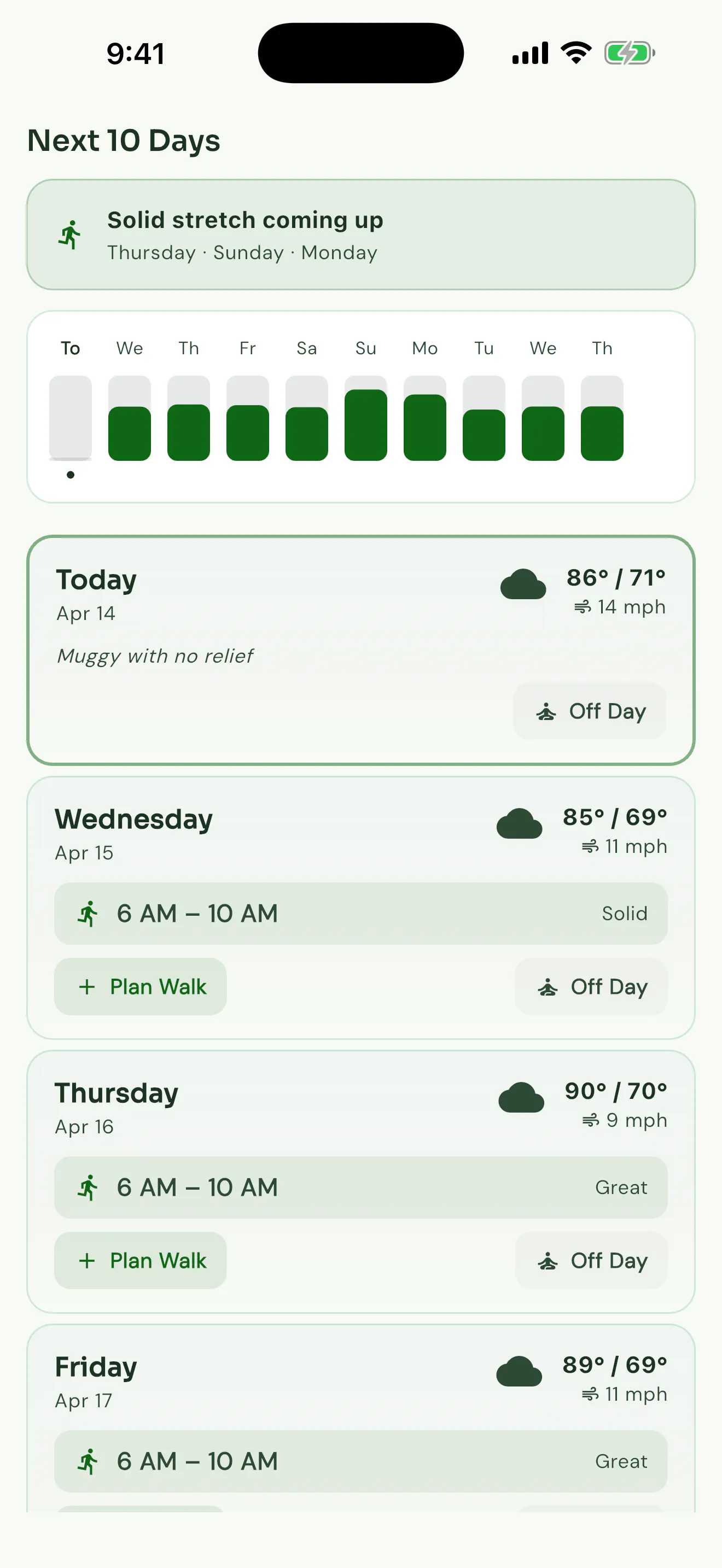
Walk Window compares local conditions across the day and surfaces the most comfortable walking window for your route and routine. Instead of treating the whole day as too cold, you can find the calmer, brighter, or slightly warmer stretch—and choose indoors when conditions stay poor.

Walk Window 10-day walking forecast with the best hour shown for each day

One last thing.

Get today’s walking window.

Walk Window does the forecast-checking. You just step outside.

Two walks a day, rain or shine? We’ll find the driest windows.