How Long Should You Walk a Day?

For general health, a practical target is 30 minutes of brisk walking on five days each week. That adds up to the 150 weekly minutes recommended for most adults. You do not need to walk for 30 minutes every day, and you do not need to complete it in one session.

Quick answer: Start with 10 minutes and add time as it becomes comfortable. Work toward 150 minutes of moderate activity each week. For weight loss, some people need more total activity—often closer to 300 weekly minutes—alongside nutrition and other health factors.

The practical version.

Daily walking targets

The useful target depends on where you are starting and what you want the walk to do. Weekly consistency matters more than one perfect daily number.

QuestionPractical answer
Just getting started?Walk for 5–10 minutes at an easy pace once a day. Finish feeling like you could do more, then add a few minutes when the current walk feels comfortable.
Walking for general health?Aim for about 30 minutes on five days each week, or any schedule that totals at least 150 minutes of moderate activity weekly.
Breaking up sitting?Use several 5–10 minute walks through the day. Short walks count and can be easier to repeat than one long session.
Building endurance?Gradually extend one or more walks while keeping a pace and route you can recover from. Increase time, frequency, or pace one at a time.
Walking for weight loss?Establish the general-health target first, then gradually add time, pace, hills, or frequency. Many people need more than 150 weekly minutes, alongside nutrition and other health factors.

Think in weeks, not perfect days.

Why the weekly total matters more

Thirty minutes a day is a convenient example, not a rule. The evidence-based target is flexible enough to fit real schedules.

The public-health benchmark is weekly

The CDC recommends at least 150 minutes of moderate-intensity aerobic activity each week, plus muscle-strengthening activity on two days. Thirty minutes on five days is one simple way to reach that total, not a requirement that every day look the same.

Read the CDC adult activity guidelines →

Short walks count

You can divide activity into smaller chunks. A brisk 10-minute walk after breakfast, lunch, or dinner contributes to the same weekly total. Short walks are especially useful when a 30-minute block feels unrealistic.

Read the American Heart Association recommendations →

Intensity changes what counts

Moderate intensity is personal. The CDC talk test is simple: during moderate activity, you can talk but not sing. A casual stroll still adds movement and can break up sitting, but a brisker pace is more likely to count toward the moderate-intensity target.

See the CDC activity-intensity guide →

More is not automatically better

Jumping from very little activity to long daily walks can cause soreness, blisters, joint irritation, or burnout. Increase duration, frequency, or pace one at a time. The useful amount is the amount you can recover from and repeat.

Read the Mayo Clinic walking guidance →

Start low. Add slowly.

A four-week walking build-up

This is a starting framework, not a deadline. Repeat a week whenever your body or schedule needs more time.

1.

Week 1: make it easy

Walk 10 minutes on four or five days. Keep the pace comfortable and finish feeling like you could do more.

2.

Week 2: add five minutes

Walk 15 minutes on four or five days. Test a slightly brisker pace during the middle of the walk if it feels comfortable.

3.

Week 3: split or extend

Walk 20 minutes at once, or take two 10-minute walks when that fits your day better.

4.

Week 4: approach the health target

Walk 25–30 minutes on five days, or use any combination that brings you toward 150 weekly minutes.

10, 20, 30, or 60 minutes: what changes?

Longer walks add more activity, but the best duration is the one that matches your current capacity and goal.

What mattersBest useHow to make it work
5–10 minutesStarting from inactivity, breaking up sitting, walking after a meal, or using a short weather window.Keep it easy enough to repeat. Add another short walk or a few minutes when you are ready.
20 minutesBuilding a meaningful daily habit without needing a large block of time.Use the talk test and gradually make part of the walk brisk if general fitness is the goal.
30 minutesA simple route to the 150-minute weekly benchmark when repeated five days a week.Split it into two or three walks when one continuous session does not fit your schedule.
45–60 minutesMore total activity for endurance, recreation, longer routes, or some weight-management plans.Build up gradually and use easier days, shorter routes, or rest when recovery starts slipping.

When to shorten, rest, or ask for guidance

The goal is repeatable movement, not forcing a daily number through pain, illness, or unsafe conditions.

  • Start with a few minutes if you have been inactive; increase gradually rather than jumping into long daily walks.
  • Stop for chest pain, faintness, severe shortness of breath, or sudden weakness and seek appropriate medical care.
  • Reduce duration when pain changes your gait, worsens as you continue, or persists after the walk.
  • Use shorter routes during heat, cold, storms, poor air quality, darkness, or unsafe footing.
  • Ask a healthcare professional how to begin if you have a chronic condition, recent injury or surgery, pregnancy-related concerns, or symptoms triggered by activity.
  • Walking is aerobic activity; adults also benefit from strength work on at least two days each week.

Common questions.

Daily walking time, answered

Is 10 minutes of walking a day enough?

Ten minutes is enough to start and is better than none. A brisk 10-minute walk contributes to the weekly activity target. Add time or another short walk when you are ready.

Is 30 minutes of walking a day enough?

Thirty minutes on five days each week reaches 150 minutes, the standard adult target for moderate aerobic activity. Your needs may differ for weight loss, athletic training, rehabilitation, or a medical condition.

Do I need to walk every day?

No. The target is usually expressed as a weekly total. Walking most days can make the habit easier, but rest days and uneven schedules are fine.

Can I split a 30-minute walk into shorter walks?

Yes. Three 10-minute walks or two 15-minute walks can be easier to schedule and still add to your weekly total. Choose the pattern you can repeat.

How fast should I walk?

For moderate intensity, use the talk test: you should be able to talk but not sing. Beginners can start slower and gradually add brisk intervals.

Can Walk Window tell me when to walk?

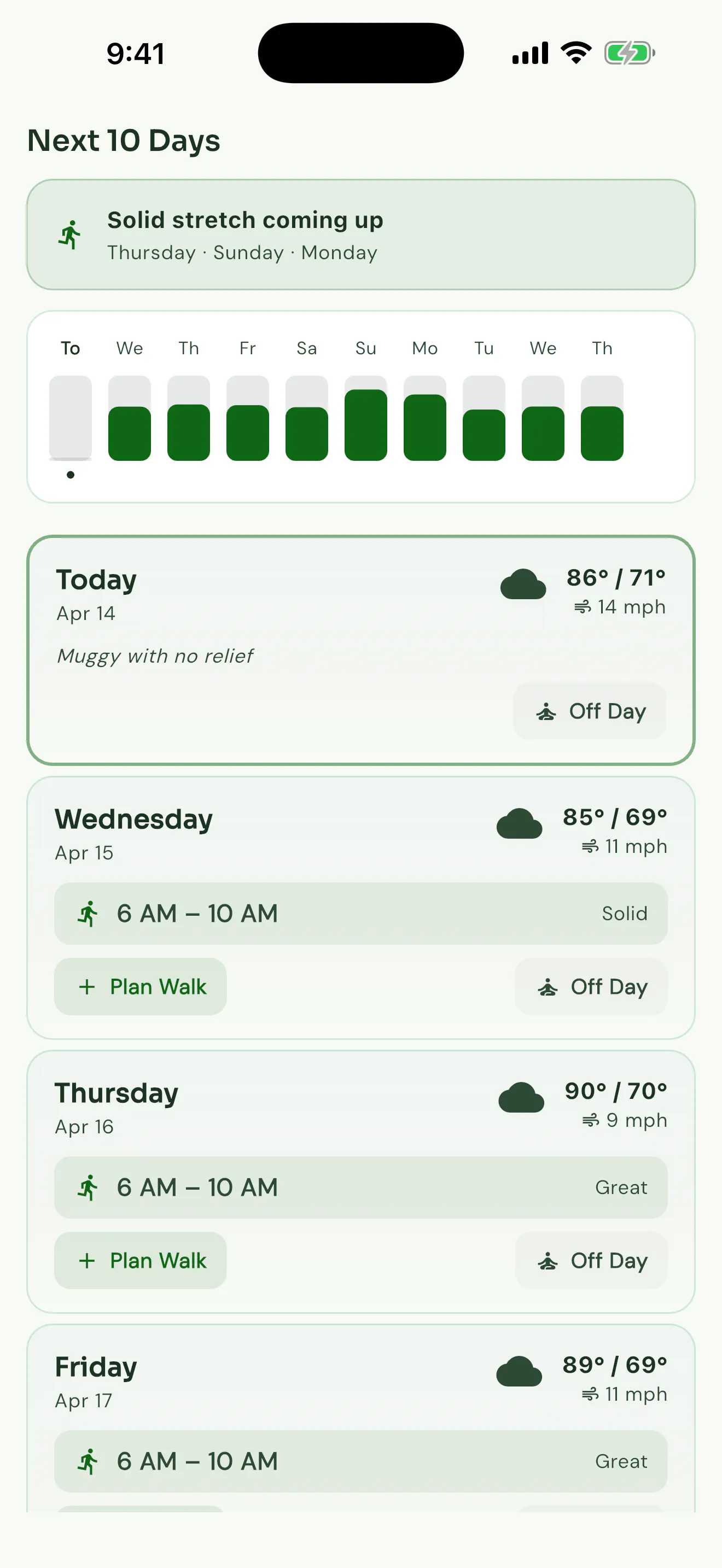
Walk Window compares hourly weather around your route and routine, then surfaces the day's most comfortable walking window. That makes a 10-, 20-, or 30-minute habit easier to place without repeatedly checking the forecast.

Walk Window 10-day walking forecast with the best hour shown for each day

One last thing.

Get today’s walking window.

Walk Window does the forecast-checking. You just step outside.

Two walks a day, rain or shine? We’ll find the driest windows.