Walking After Eating: Is It Good for You?

Yes — for most people, a gentle walk after eating is a simple way to add movement, and research shows it can reduce the immediate rise in blood sugar after a meal. The evidence is strongest for glucose control; digestion benefits are promising but less certain, and post-meal timing is not a weight-loss shortcut.

Quick answer: Walk easily for 10–15 minutes soon after eating. If you feel cramping, reflux, nausea, or pain, slow down, wait longer, or stop.

The practical version.

When and how long to walk

Keep the first version simple: an easy walk, soon after one meal, for long enough that you will actually repeat it.

QuestionPractical answer
How soon after eating?Soon after the meal appears most useful for reducing the post-meal glucose rise. Start immediately if comfortable, or wait 10–15 minutes.
How long?Start with 10 minutes. Research has also found benefits with longer 15–30 minute walks.
How hard?Easy to moderate. You should be able to hold a conversation. Save harder efforts for after the meal has settled.
After which meal?Any meal can work. Dinner is often the easiest habit cue, and some studies found a particularly useful glucose effect after the evening meal.
Before or after eating?For the immediate post-meal glucose response, research generally favors walking after eating. For overall fitness, consistency matters more.

What the evidence says.

What walking after eating can actually do

The clearest finding is about the immediate glucose response. Other benefits are plausible, but the evidence is not equally strong.

Reduce the post-meal glucose rise

This is the strongest evidence. A 2023 systematic review and meta-analysis found that exercise after eating reduced post-meal glucose excursions more than exercising before eating or remaining inactive. Starting sooner after the meal appeared more useful, although the included trials were small and varied in design.

A randomized crossover study of adults with type 2 diabetes compared one 30-minute daily walk with three 10-minute walks after meals. The post-meal walks produced a lower glucose response, with the largest difference after dinner. This is not a replacement for diabetes care; activity can affect blood sugar, so people using insulin or glucose-lowering medication should follow their clinician's guidance.
Read the systematic review on PubMed →

Add movement without finding another hour

A short walk attached to breakfast, lunch, or dinner turns an existing routine into a movement cue. Three 10-minute walks add up to 30 minutes without requiring one uninterrupted workout.

The CDC recommends that adults aim for at least 150 minutes of moderate-intensity activity per week and notes that activity can be broken into smaller chunks. An easy stroll may not always reach moderate intensity, but it replaces sitting with movement and can make a regular walking habit easier to maintain.

See the CDC activity guidance →

It may help some digestive symptoms

Some people report less fullness, gas, or bloating after an easy walk. A Cleveland Clinic gastroenterologist notes that walking may support gastric emptying and suggests walking within 15–30 minutes can be helpful for some people.

The evidence here is smaller and less consistent than the evidence for glucose control. Treat digestion as a possible benefit, not a guarantee. If walking makes reflux, cramping, nausea, or abdominal pain worse, wait longer and keep the pace easy.

Read the Cleveland Clinic guidance →

Make it easy.

How to start a post-meal walking habit

The goal is not to optimize every meal. It is to create one repeatable cue that gets you outside more often.

1.

Start with one meal

Choose the meal after which a walk fits naturally. Dinner often leads into a long stretch of sitting; lunch can be a useful midday reset. Pick the option that requires the least negotiation with your schedule.

2.

Walk for 10 minutes

Ten minutes is useful and repeatable. If it feels good, extend the walk to 15–30 minutes. More is not automatically better if a longer walk makes the habit harder to keep.

3.

Keep it conversational

This should feel like a walk, not a workout. A gentle or moderate pace is less likely to cause discomfort on a full stomach. Save hills and speed intervals for later.

4.

Let the weather choose the window

Heat, rain, wind, UV, darkness, and hot pavement can make the obvious time a poor one. Walk after another meal, shorten the route, move indoors, or wait for the day's safer window.

Walking before or after eating: which is better?

The answer changes with the outcome. Post-meal timing matters most when the goal is the immediate glucose response; general fitness is less clock-dependent.

What mattersWalking before eatingWalking after eating
Post-meal glucoseCan still be useful exercise, but current research is less consistent for reducing the glucose rise from the meal that follows.Generally has stronger evidence for reducing the immediate glucose excursion caused by that meal.
ComfortMay feel easier if you dislike moving with food in your stomach.Usually comfortable at an easy pace, but a large meal, reflux, or vigorous effort may require more time.
Weight lossNot inherently superior. Total activity, food intake, sleep, health, and consistency matter more than clock time.Adds useful activity, but post-meal timing is not a special weight-loss mechanism.
Habit fitWorks well when the walk is already part of a morning or pre-meal routine.Meals provide a built-in cue, making a short walk easier to remember and repeat.

When to wait or get medical guidance

A gentle post-meal walk is low-risk for many people, but comfort, medication, and symptoms matter.

  • After a large or heavy meal, start gently or wait 10–15 minutes if immediate movement feels uncomfortable.
  • If you experience reflux, cramping, nausea, or abdominal pain, slow down, shorten the walk, or allow more time before heading out.
  • A hard run, steep hill session, or intense power walk is different from an easy stroll and may require more digestion time.
  • If you use insulin or glucose-lowering medication, ask your clinician how post-meal activity should fit your treatment plan.
  • Stop and seek appropriate medical care for chest pain, dizziness, severe shortness of breath, or significant abdominal pain.

Common questions.

Walking after eating, answered

Is walking immediately after eating good?

It can be. Research suggests that activity soon after a meal can reduce the immediate post-meal glucose rise. If walking right away feels uncomfortable, waiting 10–15 minutes is a reasonable adjustment.

Is a 10-minute walk after eating enough?

Ten minutes is a practical starting point, and studies have found benefits from short post-meal walks. Longer walks add more activity, but consistency matters more than turning every meal into a workout.

Does walking after eating help digestion?

It may help some people with fullness, gas, or bloating, but the evidence is smaller and less consistent than the evidence for glucose control. Keep the pace gentle and adjust based on how you feel.

Does walking after eating help with weight loss?

Walking adds activity and burns energy, but post-meal timing is not a special weight-loss mechanism. Sustainable weight change depends on overall activity, food intake, sleep, health, and consistency.

Is it better to walk before or after eating?

For the immediate glucose response to a meal, walking after eating generally has stronger evidence. For overall fitness and habit-building, choose the time you can repeat safely and consistently.

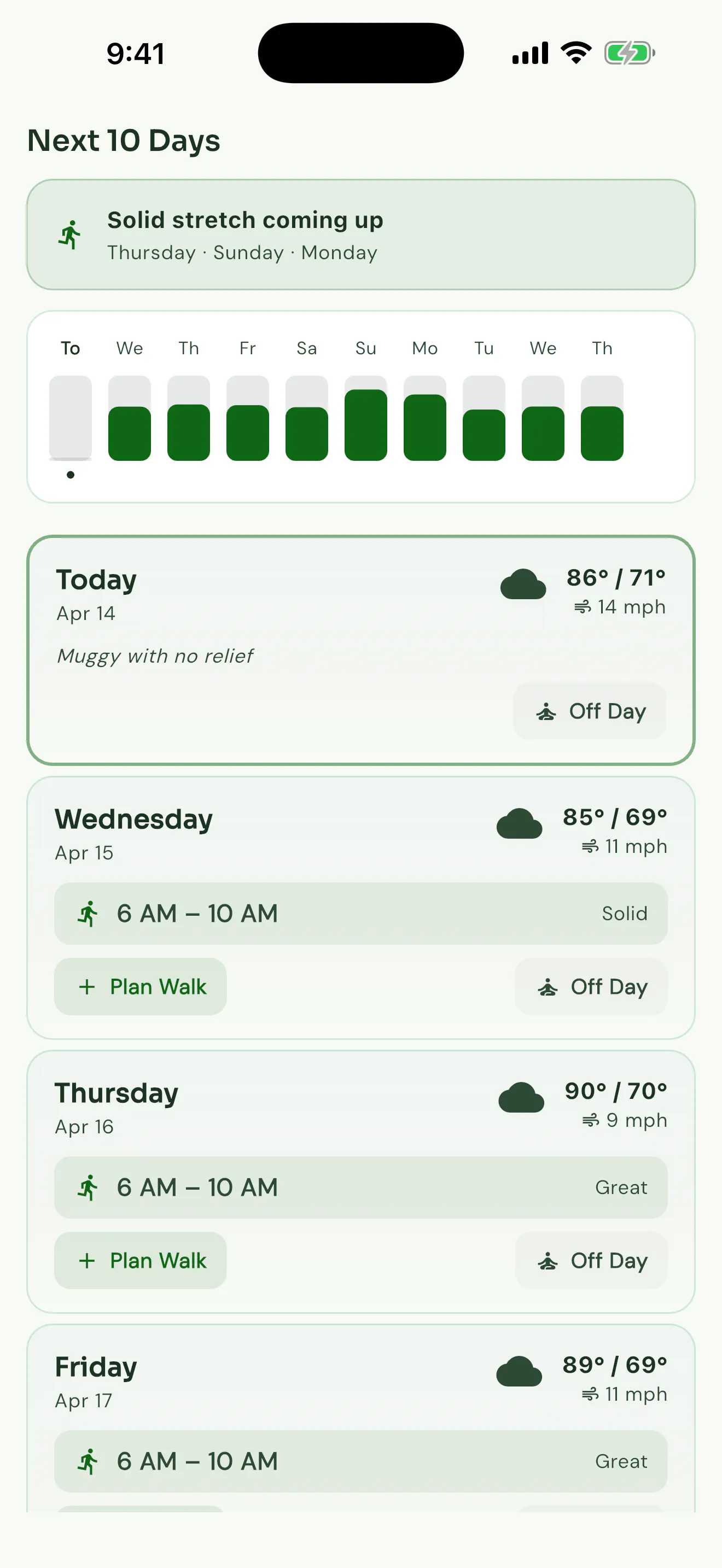
Walk Window 10-day walking forecast with the best hour shown for each day

One last thing.

Get today’s walking window.

Walk Window does the forecast-checking. You just step outside.

Two walks a day, rain or shine? We’ll find the driest windows.