Best Time to Walk a Dog: Morning or Evening?

The best time to walk a dog is usually during the coolest comfortable part of the day—often early morning in warm weather and late morning or midday in cold weather. Evening can be a good second window, but pavement may stay hot after the air begins to cool. The right answer changes with today's weather, your route, and your dog.

Quick answer: In warm weather, start with early morning, after the pavement has cooled overnight. Check the ground with your hand and choose shade or grass when possible. Short-nosed dogs, puppies, older dogs, overweight dogs, and dogs with health conditions may need shorter, cooler walks and veterinary guidance.

The practical version.

When should you walk your dog?

Use the clock as a starting point, then let the conditions and your dog make the final decision.

QuestionPractical answer
Best time in hot weather?Early morning is usually the safest starting point because the air and pavement have cooled overnight. Late evening can work, but asphalt may still be holding heat.
Best time in cold weather?Late morning or early afternoon is often more comfortable, once the day has warmed and icy surfaces are easier to see.
Morning or evening?Morning usually wins during heat. Evening is useful when the pavement has cooled and visibility is still good. Safe conditions matter more than a fixed hour.
How do I check pavement?Place the back of your hand on the surface for about 7–10 seconds. If you cannot keep it there comfortably, choose grass, shade, booties, a shorter outing, or wait.
What changes for flat-faced dogs?Bulldogs, pugs, French bulldogs, and other short-nosed breeds can have more difficulty cooling themselves. Use cooler windows, shorter walks, more breaks, and your veterinarian's advice.

Read the conditions, not only the clock.

Four things that decide whether it is a good walking window

Morning and evening are shortcuts. A safe, comfortable walk depends on the weather, the surface under your dog's paws, the route, and the dog beside you.

Air temperature and humidity

Dogs cool themselves differently from people, and warm, humid conditions can make heat harder to shed. The American Veterinary Medical Association recommends walking during cooler hours, avoiding the hottest parts of the day, carrying water, and taking breaks. Excessive panting, heavy drooling, unsteadiness, or collapse are reasons to stop and seek veterinary care.
Read the AVMA warm-weather guidance →

Pavement temperature

Air temperature does not tell you what your dog's paws are touching. Asphalt, artificial turf, and other dark surfaces can become much hotter in direct sun. The American Kennel Club advises testing the ground with your hand and choosing early morning or evening, grass, or shade when surfaces are hot.

Read the AKC hot-pavement guidance →

Sun, shade, rain, wind, and storms

Cloud cover and shade can make the same air temperature feel very different. Rain and wind may be manageable on a short sheltered route but unpleasant or unsafe on an exposed one. Thunderstorms, ice, poor visibility, and severe-weather alerts can override an otherwise comfortable temperature.

Your dog's body and health

Breed, muzzle shape, coat, age, weight, conditioning, and health all affect tolerance. Puppies have sensitive paws; older or overweight dogs may fatigue sooner; and short-nosed breeds have a higher risk during warm-weather exercise. A generic temperature chart cannot replace watching the individual dog or consulting a veterinarian.

Read the PetMD summer walking guidance →

Make one safe decision.

A four-step check before you clip on the leash

You do not need to become a meteorologist. Check the few conditions that can change the walk, then choose the easiest safe window.

1.

Scan the hourly forecast

Look for the coolest comfortable stretch, rain or storm timing, wind, humidity, and enough daylight for your route.

2.

Check the walking surface

Test sun-exposed pavement, especially after a warm afternoon. Move to shade, grass, or another time when the surface is uncomfortable.

3.

Adjust for your dog

Shorten the route or lower the intensity for puppies, older dogs, flat-faced breeds, overweight dogs, and dogs with heart, breathing, or mobility issues.

4.

Watch the dog, not the plan

Slow down or stop if your dog is lagging, seeking shade, panting unusually hard, drooling excessively, stumbling, vomiting, or acting distressed.

Morning vs. evening dog walks

Both can work. The better window combines cooler conditions, safe pavement, visibility, and a routine you can repeat.

What mattersMorning walkEvening walk
Summer heatUsually the better choice because both air and pavement have cooled overnight.Air may cool before pavement does; test the surface after hot, sunny days.
Winter coldMay be the coldest and darkest part of the day.Often warmer than early morning, though daylight can disappear quickly.
PavementUsually coolest before prolonged sun exposure.Can retain heat for hours after peak afternoon temperatures.
VisibilitySunrise timing matters; reflective gear may still be useful.Use lights or reflective gear as daylight fades.
RoutineGood for starting the day and avoiding afternoon heat or storms.Good for post-work consistency and calmer neighborhood activity.

When to shorten, delay, or skip the walk

Missing or shortening one walk is better than pushing through conditions your dog is not handling well.

  • Avoid the hottest part of warm days and any surface that fails the hand test.
  • Delay outdoor exercise during severe-weather warnings, lightning, dangerous air quality, or icy conditions that make footing unsafe.
  • Bring water and take breaks during warm walks; choose shorter routes with shade.
  • Use extra caution with short-nosed dogs, puppies, older dogs, overweight dogs, and dogs with heart, respiratory, or mobility conditions.
  • Stop for excessive panting, heavy drooling, weakness, unsteadiness, vomiting, abnormal gum color, or collapse, and contact a veterinarian or emergency clinic as appropriate.
  • Ask your veterinarian how exercise should change for your dog's health, medication, age, or breed.

Common questions.

Dog-walking timing, answered

What is the best time of day to walk a dog?

There is no universal hour. Early morning is usually the best starting point in hot weather because the air and pavement have cooled overnight. In cold weather, late morning or early afternoon may be more comfortable. Check the day's actual conditions before deciding.

Is it better to walk a dog in the morning or evening?

Morning usually has cooler pavement during hot weather. Evening can be convenient and cooler than afternoon, but asphalt may still hold heat. Pick the window that is safe for the surface, visible enough for the route, and repeatable for your household.

What temperature is too hot to walk a dog?

There is no single safe cutoff for every dog. Humidity, sun, pavement, breed, age, health, and walk intensity all matter. The AVMA recommends cooler hours and avoiding hot surfaces; the AKC advises extra caution when air temperatures remain around 85°F or higher and testing the pavement with your hand.

How long should I walk my dog in hot weather?

Shorter is safer when conditions are warm. Use a shaded route, carry water, take breaks, and stop when your dog shows distress. Flat-faced dogs and dogs with health risks may need a much shorter outing or indoor activity instead.

Can Walk Window tell me when to walk my dog?

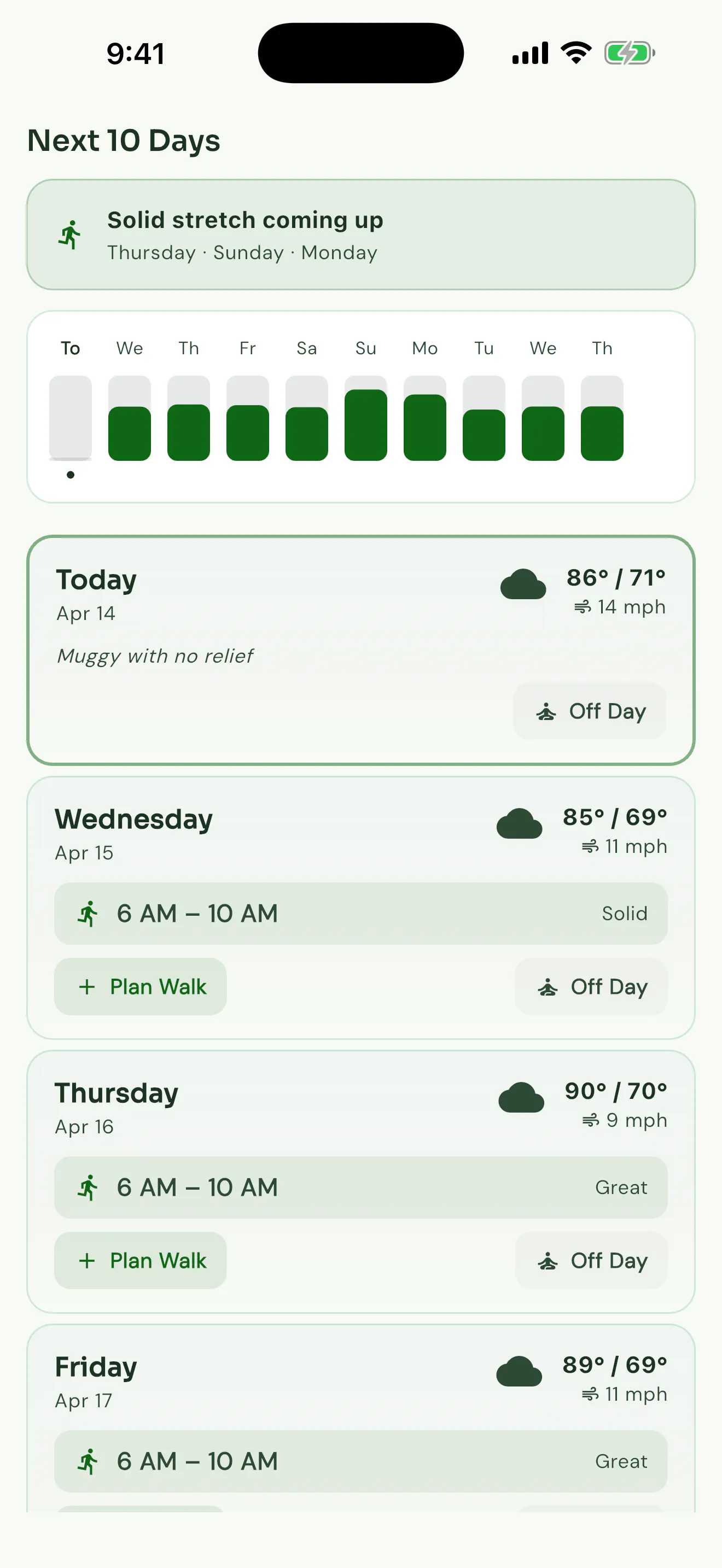
Walk Window checks local weather hour by hour and surfaces the day's best walking window. Dog Walker mode adds pavement-temperature safety guidance and tighter thresholds for dogs that are more vulnerable to heat, so you get one practical answer instead of interpreting the forecast yourself.

Walk Window 10-day walking forecast with the best hour shown for each day

One last thing.

Get today’s walking window.

Walk Window does the forecast-checking. You just step outside.

Two walks a day, rain or shine? We’ll find the driest windows.