Best Time to Walk in Winter: Cold Weather Walking Guide
Winter doesn't have to end your walking routine, but it does demand respect. Cold temperatures, wind chill, ice, snow, and limited daylight all shrink your comfortable walking window. The walkers who stay consistent through winter are the ones who pick their moment carefully.
The best time to walk in winter is midday (11 AM - 2 PM), when temperatures reach their daily high and the sun provides maximum warmth. This is the opposite of summer's pattern, where midday is the worst time. In winter, that midday sun is your friend.
Understanding Cold Weather Walking Risks
Wind Chill: The Real Temperature
Wind chill is what separates a comfortable walk from a dangerous one. Moving air strips heat from your body far faster than still air at the same temperature.
| Air Temp | Wind Speed | Wind Chill | Walking Risk | |----------|-----------|------------|-------------| | 35°F | 10 mph | 27°F | Comfortable with layers | | 35°F | 25 mph | 19°F | Cold — full winter gear needed | | 20°F | 10 mph | 9°F | Very cold — limit walk to 30 min | | 20°F | 25 mph | -1°F | Dangerous — frostbite risk | | 10°F | 15 mph | -4°F | Dangerous — short walks only | | 0°F | Any | Below 0°F | Stay inside |
General guidance for walkers:
- Above 20°F, low wind: Comfortable with proper layers. Walk normally.
- 20-40°F, moderate wind: Manageable. Dress warmly, protect extremities.
- Below 20°F: Limit walk duration. Cover all exposed skin.
- Below 0°F wind chill: Not recommended for recreational walking. Frostbite can occur in 30 minutes on exposed skin.
Ice and Snow
Slippery surfaces are a walking hazard from November through March in northern regions. Falls on ice are a leading cause of winter injuries, especially for older adults.
Reducing slip risk:
- Walk on cleared, salted sidewalks and paths
- Wear shoes or boots with good traction (look for rubber soles with deep lugs)
- Consider traction devices (Yaktrax, ice cleats) for icy routes
- Take smaller steps — shorter steps give you better balance
- Avoid walking on packed snow that might hide ice underneath
- Walk in daylight so you can see ice patches
Shortened Daylight
In December, many US locations get dark before 5 PM. If you work traditional hours, your only daylight walking opportunity might be lunch. This makes midday walks not just ideal for temperature — they might be your only option for walking in daylight.
Winter Walking by Month
December: Shortest Days
December's biggest challenge isn't necessarily the cold — it's the darkness. The winter solstice (around December 21) marks the shortest day of the year.
- Best time to walk: 11 AM - 2 PM for maximum warmth and daylight
- Watch for: Ice, early darkness, holiday schedule disruptions
- Motivation tip: Short walks count. A 15-minute midday walk is better than skipping entirely.
January: Coldest Month
January brings the lowest temperatures in most of the US. This is when walk windows are at their absolute narrowest.
- Best time to walk: Noon - 2 PM on days above 20°F
- Watch for: Extreme cold snaps, black ice, wind chill advisories
- Strategy: Watch for warm spells (those random 40°F January days) and take full advantage
February: Light Returns
February is still cold, but daylight is noticeably increasing. By month's end, sunset pushes past 6 PM in most locations, opening up late afternoon walking again.
- Best time to walk: 11 AM - 3 PM (wider window as days lengthen)
- Watch for: Late-season storms, freeze-thaw cycles creating ice
- Motivation: Spring is coming. Every walk in February builds momentum.
Winter Layering for Walkers
Layering is the difference between a comfortable winter walk and a miserable one. The key principle: you'll warm up as you walk, so start slightly cool.
Base Layer
Moisture-wicking fabric against your skin. This layer's job is to move sweat away from your body. Never wear cotton as a base layer — it absorbs moisture and holds it against your skin, making you colder.
- Merino wool or synthetic (polyester) base layers work well
- Snug fit to maximize wicking
Mid Layer
Insulation. This layer traps body heat.
- Fleece jacket or vest for moderate cold (30-45°F)
- Puffy jacket (synthetic or down) for extreme cold (below 30°F)
- Zip-front layers are ideal — you can vent as you warm up
Outer Layer
Wind and moisture protection. Even if it's not raining, a wind-blocking outer layer dramatically improves comfort.
- Wind-resistant softshell for dry, windy days
- Waterproof hardshell for snow or rain
- Look for pit zips or other ventilation for temperature regulation
Extremities
Your body prioritizes keeping your core warm, which means fingers, toes, ears, and nose get cold first.
- Hands: Insulated gloves (mittens are warmer than gloves if you don't need finger dexterity)
- Head: A warm hat or headband covering your ears
- Neck: Gaiter or balaclava for below-20°F walks
- Feet: Wool socks (not cotton), waterproof boots or shoes for snow/slush
Dog Walking in Winter
Winter has some unique considerations for dog walkers:
- Paw protection: Salt and de-icing chemicals can irritate paw pads. Rinse paws after walks, or use dog booties.
- Cold tolerance varies by breed: A Husky is built for winter. A Chihuahua is not. Know your dog's limits.
- Short-coated dogs: Consider a dog coat or sweater for breeds with thin coats (Greyhounds, Whippets, small breeds)
- Ice balls: Long-haired dogs get ice balls between their toes. Trim paw fur or apply paw wax before walks.
- Visibility: Dark dogs are hard to see in early darkness. Use reflective collars or LED clip-on lights.
One winter upside for dog walkers: you don't have to worry about pavement temperature burns. The summer struggle is over.
Weighted Walking in Winter
Winter weighted walking has advantages: the extra weight generates body heat, which makes cold temperatures more tolerable. Many walkers carrying weight find 30-40°F to be a comfortable range.
- Layer lighter than you would for a casual walk — the extra weight generates heat
- Protect your hands — cold metal plates conduct cold through the pack
- Watch footing — extra weight on your back changes your center of gravity, making slips more dangerous
- Hydrate — you still sweat in cold weather, but you're less likely to notice. Carry water.
Tips for Consistent Winter Walking
- Make midday non-negotiable — If you can step outside at lunch, protect that time. It's your best winter window.
- Gear up the night before — Laying out cold-weather gear removes a morning friction point.
- Start with 10 minutes — On brutally cold days, commit to 10 minutes. You can always turn back. (You usually won't.)
- Watch for warm spells — When a 45°F day pops up in January, that's your standout day. Don't waste it.
- Walk with someone — Winter motivation is easier with a walking partner or group.
- Accept shorter walks — A 20-minute winter walk still delivers health benefits. Not every walk needs to be an hour.
How Walk Window Helps in Winter
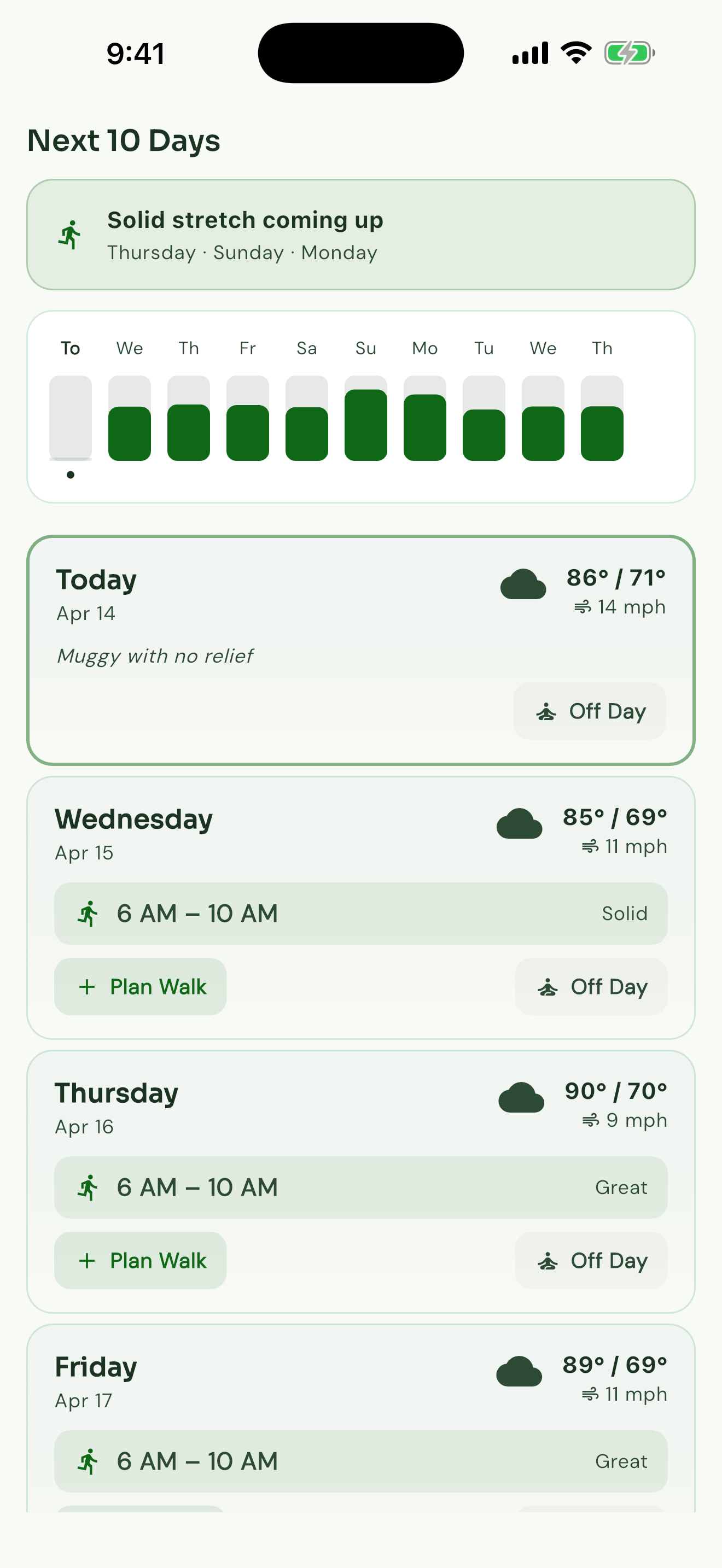
Winter is when Walk Window earns its keep. A weather app shows you "28°F, 15 mph wind." Walk Window tells you the day is cold, but your 12 PM - 1 PM stretch reaches 34°F with calmer winds — that's your best shot today.
On days when no hour looks truly comfortable, Walk Window still points to the least uncomfortable window. Sometimes the choice isn't between a great walk and a bad walk — it's between a manageable walk at noon and a miserable one at 4 PM. Knowing the difference matters.
The standout day notification is critical in winter. When a warm front pushes through and delivers a 50°F day in January, you'll get an alert so you can adjust your schedule around it. Those days are rare and shouldn't be missed.
The Bottom Line
Winter walking is about finding the narrow window and being prepared for it. The midday warmth window, proper layering, and respect for wind chill and ice are your three pillars. The walkers who maintain their routine through winter arrive at spring with their fitness, their habit, and their mental health intact. That's worth bundling up for.