Best Time to Walk in Fall: Peak Walking Season
Fall is walking season. Ask any regular walker when conditions are best, and most will point to September through November. The combination of moderate temperatures, lower humidity, manageable wind, and stunning scenery makes autumn the easiest time of year to get outside.
The best time to walk in fall is almost anytime. Seriously. Mid-morning through late afternoon (9 AM - 5 PM) typically offers excellent conditions, with the widest comfortable walking windows of any season. The only constraints are shortening daylight and occasional wind.
Why Fall Is the Best Walking Season
Temperature Sweet Spot
Fall temperatures regularly land in the 45-75°F range — the ideal comfort zone for most walkers. You're past summer's oppressive heat but haven't hit winter's bitter cold. Many fall days sit squarely in the 55-65°F range, which is about as perfect as walking weather gets.
For brisk walkers and weighted walkers, fall is even better. The cooler air means your body stays comfortable on a longer walk. A walk that would leave you drenched in July feels invigorating in October.
Humidity Drops
Summer's sticky humidity gives way to drier air as fall progresses. Dew points drop from the 65-70°F range (oppressive) to the 40-50°F range (comfortable). This makes a dramatic difference in how a walk feels — 70°F with a 45°F dew point is crisp and pleasant, while 70°F with a 65°F dew point is muggy and draining.
Pavement Safety Returns
For dog walkers who spent all summer navigating scorching asphalt, fall is a relief. With air temperatures in the 50s and 60s and lower sun angles, pavement temperatures drop well below danger thresholds. By mid-October in most regions, pavement temperature is no longer a daily concern.
Longer Walk Windows
In summer, you might have a 2-3 hour comfortable walking window. In fall, that window expands to 8-10 hours on many days. The entire stretch from mid-morning to late afternoon is often walkable, giving you maximum flexibility to fit a walk into your schedule.
Fall Walking by Month
September: The Transition
September straddles summer and fall. Early September can still feel like summer in much of the country, with temperatures in the 80s and residual humidity. But by late September, the shift is unmistakable.
- Best time to walk: Morning (8-10 AM) early in the month, expanding to nearly all day by late September
- Watch for: Lingering summer heat in the first two weeks, hurricane season in coastal areas
- Bonus: Fall foliage begins in northern states
October: Peak Walking
October is the crown jewel. Temperatures are consistently in the ideal range, humidity is low, and foliage is at or near peak color in many regions.
- Best time to walk: Anytime between 9 AM and 5 PM on most days
- Watch for: First frosts (dress in layers for morning walks), shorter days (sunset around 6:30 PM by month's end)
- Bonus: The best walking month for dog walkers — comfortable for both owner and pet
November: The Cool Down
November brings the first real taste of winter weather. Temperatures drop more noticeably, wind picks up, and daylight dwindles. But plenty of excellent walking days remain, especially in the first half of the month.
- Best time to walk: Midday (11 AM - 3 PM) to catch the warmest temperatures
- Watch for: Shorter days (sunset before 5 PM by month's end), wind chill, first snow in northern areas
- Clothing: Transition to winter walking gear — heavier layers, wind protection
The Two Things to Watch in Fall
Shortening Daylight
This is the biggest challenge for fall walkers. In September, you have daylight until 7:30 PM. By late November, the sun sets before 5 PM. If you walk after work, you'll progressively lose daylight as the season goes on.
Strategies for shorter days:
- Shift to lunchtime walks when possible
- Wear reflective gear for dawn or dusk walks
- Carry a light — a headlamp or flashlight for visibility
- Adjust expectations — a 4:30 PM walk in November means walking at dusk
Fall Wind
Fall can be windier than summer, especially as cold fronts move through. Wind makes temperature feel 5-15°F colder than actual temperature (wind chill), and sustained winds above 15 mph can make a walk unpleasant regardless of temperature.
The good news: wind is usually manageable if you dress for it. A wind-resistant outer layer makes a 20°F difference in perceived comfort on a breezy fall day.
Fall Walking Tips
Layer for Temperature Swings
Fall morning walks might start at 45°F and end at 55°F. The classic fall layering approach:
- Base: Long-sleeve shirt
- Mid: Light fleece or vest
- Outer: Wind-resistant jacket (you'll probably take it off partway through)
The vest is particularly useful in fall — it keeps your core warm while letting your arms vent heat as you warm up.
Take Advantage of Post-Rain Walks
Fall rain tends to be steady rather than stormy (unlike spring's thunderstorms). After a fall rain, the air is crisp, leaves glisten, and walking conditions are often at their best. Don't let a rainy morning stop you from walking in the afternoon.
Dog Walkers: Enjoy the Freedom
After months of checking pavement temperatures and limiting walks to early morning, fall is liberating for dog walkers. Your dog can walk comfortably at almost any time of day. Use this freedom to explore new routes, take the longer loop, and let your dog enjoy the season as much as you do.
Weighted Walkers: Enjoy the Cool Air
Fall's cool, dry conditions are perfect for a weighted walk or a brisker walk. The cooler temperatures mean you stay comfortable longer without overheating. Many walkers find October and November are their favorite months of the year to be outside.
How Walk Window Reads Fall Days
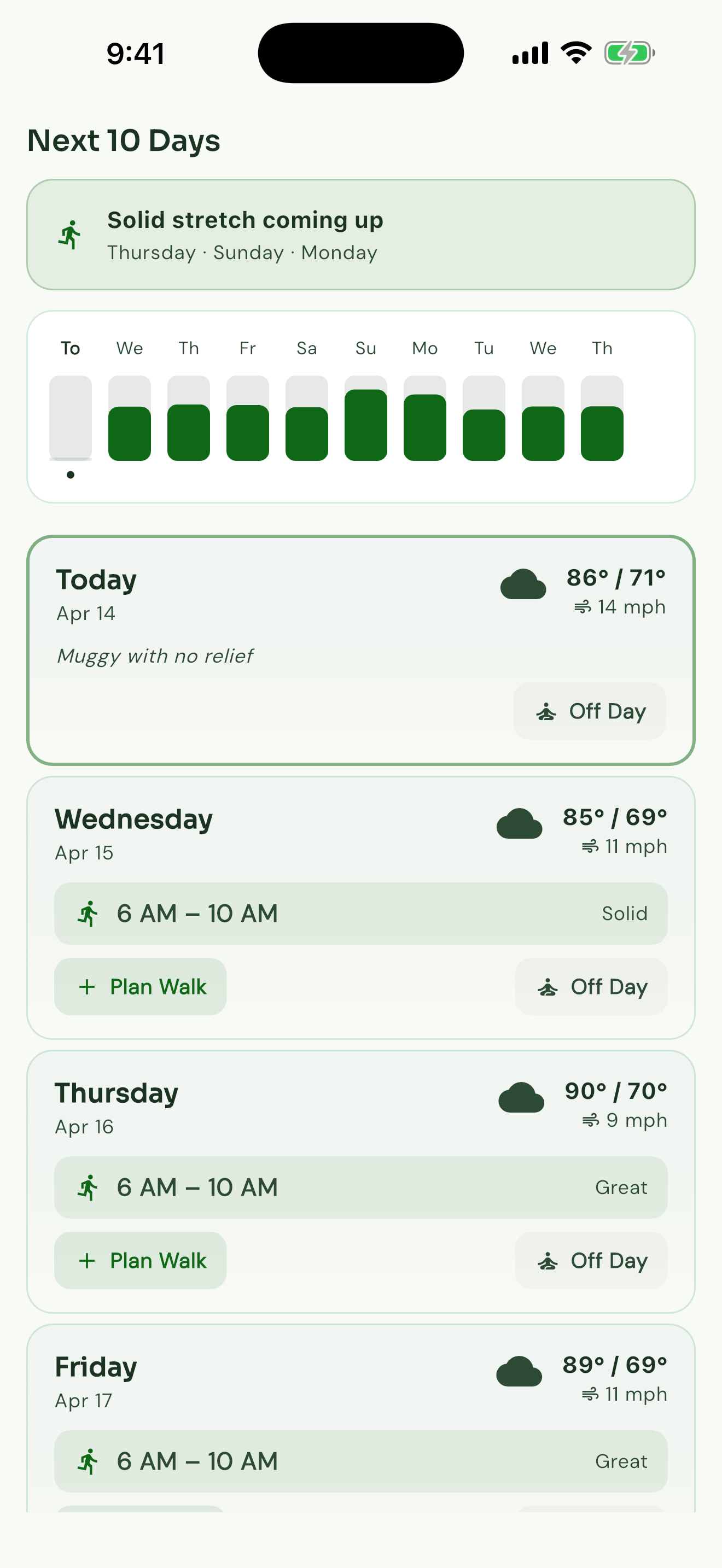
Walk Window confirms what your body already tells you: fall days are good days. You'll regularly see several hours marked Go Walk Now on a fall day, where in summer you might only get one or two good hours.
The app is especially useful during fall's transition periods — early September when summer conditions linger, and late November when winter starts to bite. On those borderline days, Walk Window shows you the best hours within the day so you catch the comfortable window rather than the cold or warm extremes.
Standout day notifications will arrive more often this season. When you get one, pay attention — it means conditions are exceptionally good even by fall's high standards.
The Bottom Line
If you've been waiting for the right season to build a walking habit, fall is it. The conditions are forgiving, the windows are wide, and the only real constraint is daylight. Get outside, enjoy it, and build the momentum that carries you through winter.